

Brand:-
Model:-
MOQ:-0 -
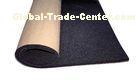
3 mm (118 mil) Thick Natural Foam Automotive Thermal Sound Insulation Material With Self Adhesion
Specifications:
| Model | GY-03 |
| Raw Material : | Natural foam rubber with adhesion |
| Foam Color : | Black |
| Release Paper : | Yellow ; White ; Brown |
| Thickness : | 3 mm(118 mil) (Accept customerization) |
| Size : | 500mm X 800mm;19.6”x31.5” ( Accept customerization) |
| Weight: | 0.3kg/pcs |
| Warranty | 1 year |
| Packaging: | |
| Door Kits | 4 pcs / pack ; 5 packs / Carton |
| Bulk Kits | 9 / 10 pcs / Pack ; 2 packs / Carton |
| Normal | 30 pcs / Carton |
Description:
GY-03 Natural Foam Rubber Sound Insulation Material With Self Adhesion Specially For Auto
GY-03 is self-adhesive foam material that can reduce vehicle engine noise, wheel noise, road noise, wind noise heat and improve car audio sound quality.It can used in anywhere of car.
Features:
1, High-Tick,felixible ,easy-to-install,
2, Increases SPL
3, Eliminates sound leakage!
4, Improves Bass Quality and Reduces Bass Distortion
5, Reduce exhaust and engine noise
6, Full car installation reduces unwanted noises 5-8 dB
7, Temperature range of -60 degree ~160 degree
8, Service life:7-8years
Areas for application
Can be die cut to shape and placed onto the body surface directly on painted panels or after the sheet metal is cleaned before painting (typically at the sealer application operation). is used to treat metal panels, partitions, ducts, doors, bins, panels, and so forth in railroad cars, buses, automobiles, and ships.
Also used for ventilation ducts, relay cabinets, steel furniture, home appliances, sink units, computer equipment, machine tools and many other objects that suffer from vibration-produced noise.
Others,used for building construction, electronic industry, machinery, steel furniture, home appliances noise.
Installation
Use scissors, knife or die to cut the mat to the desired size and shape before removing the release liner. Next, remove dust, grease, moisture, and other foreign matter from the application surface. Peel off the release liner. The simplest application technique is to bend the mat slightly and attach it along its shortest edge. Press the mat firmly into place, using a roller for larger pieces. The roller reduces the risk of leaving air pockets, which reduce sound damping capacity. The temperature of the mat and application surface should not be below room temperature during fittin


