

Brand:linfeng tibetan art
MOQ:1
Quantity:300
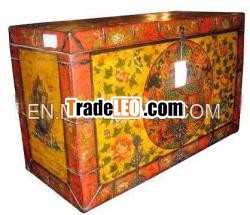
A leather covered wooden trunk tibetan style has a largefront-facing, curling dragon amongst clouds in the centralcartouche. There is a flower design connected in a trellis pattern,known as kati rimo, in the field and golden scroll containingjewels in the corners. The border is decorated with flowers andleaves in the corners and clouds in the centre top and bottom. Thecolour scheme of this box is red, blue, green and gold on anorange-red background.
| Place of origin | Tibet |
| Material | yak skin covered with tibetan pine with old metal workdecorated |
| Model number | LF-Trunk 46 |
| Size | L 130cm W50cm H75cm |
| Packing | Usually we use two layers to pack them, the inner layer is bythe plastic foam, second layer(outside of the first layer) is thefour-layers paper carton,big items finially packed with the strongplastic strip.usually 80-90 pieces of middle size chest can be fitinto a 20- foot container . |
| Weight |
Tibetan monastic boxes or chests were originally used in thestore rooms of monasteries to hold the brocades, hangings,ornaments, Cham costumes, masks and other precious objects thatwere not used every day. These chests were often offered to themonastery by a sponsor, so each donor would try to use the bestmaterials and the best artists of the time to make the box a worthyoffering. They were also commissioned by the monastic authoritiesthemselves, and would have been painted by the thankha painters ofthat monastery. Often large amounts of gold and the best mineralcolours were used in the execution, hence some of the best examplesof Tibetan furniture decoration are found on these chests. Dragons,lotus flowers andflaming jewels are amongst the most popular motifson the boxes
Tibetan people belives that the yak skin could drive the bad luckaway and keep the good luck stay.Furniture from Tibet has alwaysbeen quite rare. Except for the wealthy, Tibetans used very littlefurniture in their homes, and the population of Tibet has alwaysbeen so small that not much was ever made. Most of it was probablyalways found in the monasteries, and of course most of thesemonasteries were destroyed by the Chinese during the "CulturalRevolution" along with huge amounts of furniture. Made primarilyfrom pine and other Himalayan soft woods, it is noted more for itssometimes lavishly painted surface and/or carved decoration thanfor its joinery.
Leather covered wooden trunk tibetan style

